HomeJournal › Ingredient Science

Ingredient Science

Maca and Catuaba: Traditional Stamina Botanicals

Two ingredients with long traditional records and modest modern evidence. Both facts belong in the same sentence.

Written by the Jellysforce Editorial Desk Checked against the current jar label Updated 6 August 2026 Cited: NIH, NCCIH, FDA

On this page

  1. Maca: a root grown where little else survives
  2. What modern research has looked at
  3. Catuaba: Brazil's herbal tonic
  4. How to read claims about both critically
  5. Where they fit in a formula

Maca: a root grown where little else survives

Maca (Lepidium meyenii) is a cruciferous root — botanically closer to a radish than a herb — cultivated in the Peruvian Andes above 4,000 metres. Few crops survive that environment, which is partly why it became a dietary staple there.

It has been grown and eaten in the region for centuries, valued specifically for supporting energy and physical endurance under genuinely punishing conditions. That traditional record is real and long, which is more than can be said for many ingredients in this category.

What modern research has looked at

Interest centres on maca's glucosinolates and macamides, compound families not widely found elsewhere. Research areas include energy and fatigue measures, endurance markers and mood.

Being straight about the state of the evidence: studies are generally small, methodologies vary, and results are not consistent enough to call anything settled.

Catuaba: Brazil's herbal tonic

Catuaba refers to the bark of several trees, most commonly from the Erythroxylum and Trichilia genera. That botanical ambiguity is worth knowing: “Catuaba” on a label does not always denote a single species, which complicates comparing products.

In Brazil it is among the most widely consumed herbal tonics, traditionally taken as a bark infusion to support energy and general well-being. Its published literature is primarily preclinical.

How to read claims about both critically

  • Check the form. Gelatinised maca, raw maca powder and concentrated extract are not equivalent, and labels rarely explain which is used.
  • Check extract versus powder. A large milligram figure on a raw-powder label is not automatically stronger than a smaller extract figure.
  • Be sceptical of hormonal claims. Maca is frequently marketed as a hormone booster; the research does not support strong hormonal claims in men with normal baseline levels.
  • Look for a named species on catuaba labels. Specificity is a small signal of sourcing care.

Where they fit in a formula

In a men's blend, both typically occupy the stamina and endurance slot rather than the headline position. That is an honest placement, and it is how Jellysforce uses them: sustained physical output through a day, rather than an acute pre-workout effect.

A formula that built its entire pitch on either would be overreaching. One that includes them as traditional components while resting stronger claims on better-supported ingredients is doing something reasonable.

Disclaimer: this article is general information, not medical advice. Jellysforce is a dietary supplement and is not intended to diagnose, treat, cure or prevent any disease. Individual results vary. For healthy adults aged 18 and over. Talk to your doctor before starting any supplement, particularly alongside prescription medication.

Jellysforce Editorial Desk

We write from the product label outward, check each ingredient against what it is genuinely studied for, and publish the unflattering parts too. See our editorial standards.

Keep reading

Back to the journal

Answers

Frequently asked questions

No. Maca contains no caffeine and is not a stimulant. Any energy support is proposed to be nutritional rather than stimulatory.

No. Catuaba is not a stimulant and contains no caffeine.

This website may earn a commission on purchases made through links to the official Jellysforce store, at no additional cost to you. Our editorial standards and affiliate disclosure are published in full on this site.

No. Jellysforce is a dietary supplement and is not intended to diagnose, treat, cure or prevent any disease, including erectile dysfunction or low testosterone.
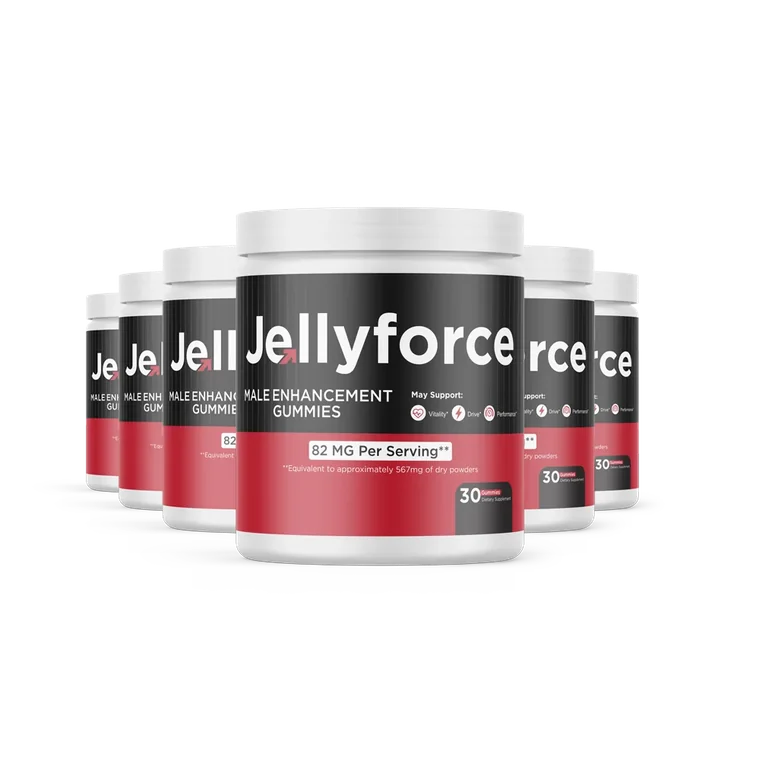
Jellysforce six-jar package
Regular price: $99 per jar
Today from $49 per jar
Order Jellysforce from the official website

Backed by the 60-day money-back guarantee. Secure checkout on the official website.

Order Jellysforce — From $49 60-day money-back guarantee • Official website only